
History Of The Beacon
– Church : – Ministers : – Drama Group
Church
Let us start by putting the history of the Beacon into context, by saying that denominations only reflect very small differences between traditions and that all Christians hold the same core beliefs and most worship together regularly.
So, the history of the Beacon Church Centre actually starts with the Methodist Church that opened a chapel in 1841 on Rubery’s Leach Green Lane. With the changes to the roads, this would now be part of the Bristol Road, rather than the existing Leach Green Lane.


This is a picture of the chapel, on the right of the photo as we look into Rubery along New Road prior to the Tram Terminus being built (in 1924). Today this would be obscured by the flyover that was built in the 60s.
Leach Green Lane comes down from the middle/left of this photo and continues to the Chapel. The exact date that this photograph was taken is not known but we believe that this would have looked like this from when the chapel was built until the tram terminus was developed (1841 – 1924).
Not a single car in site and the road appears to have been churned up with the wheels of carriages drawn by horses. To put the date into context, this was the year that Queen Victoria gave birth to her son who later became King Edward VII.
Ten years later in 1851 the church was rented out to the Congregationalists who then formed the Rubery Congregational Church, an offshoot from the Bromsgrove Congregational Church. The Sunday school was formed in this year and two years later in 1853 the building was purchased from Methodists and in 1854 James Wilson became the minister.
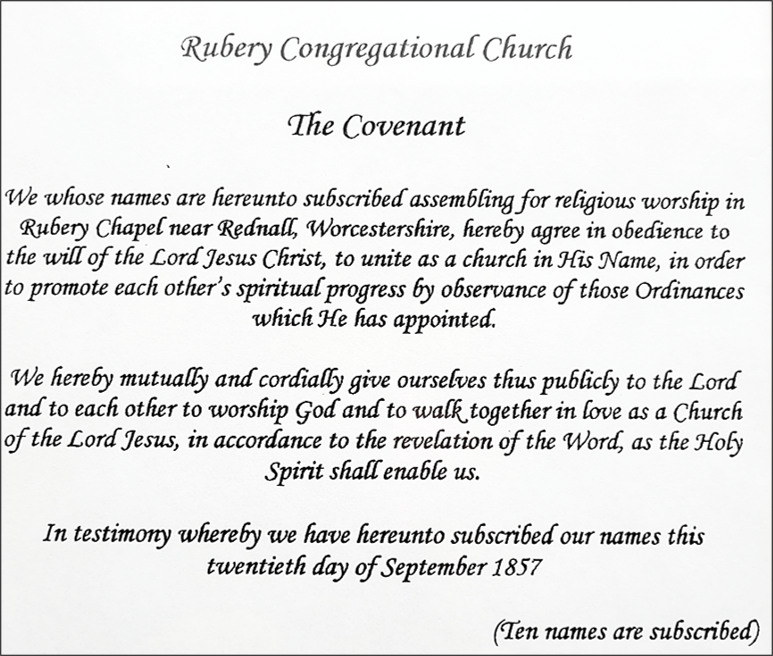
In 1857 the Church became part of the Congregational Church, in its own right, rather than as part of Bromsgrove. Ten members of the Church signed the covenant, reproduced here. It is thought that the ten signatories became the first deacons of the Church (now called elders). Benjamin Worton was the minister at this time.
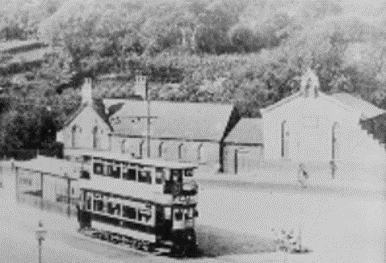
By 1890 the church buildings needed to be enlarged to accommodate the growing congregation and this is shown in this photograph, taken at some time after 1924 as it has a tram in front. Trams were beginning to replace horse drawn buses but cars were rarely seen.
In 1925 the freehold of land on Whetty Lane, that the current church stands on, was transferred from the Cadbury Estate to the Church for a new church building.
In 1927, the church Deacons (now called Elders) decided that some kind of activity should be organised for the boys of the church. They chose the Boys Brigade, and a demonstration meeting was held in August 1927.
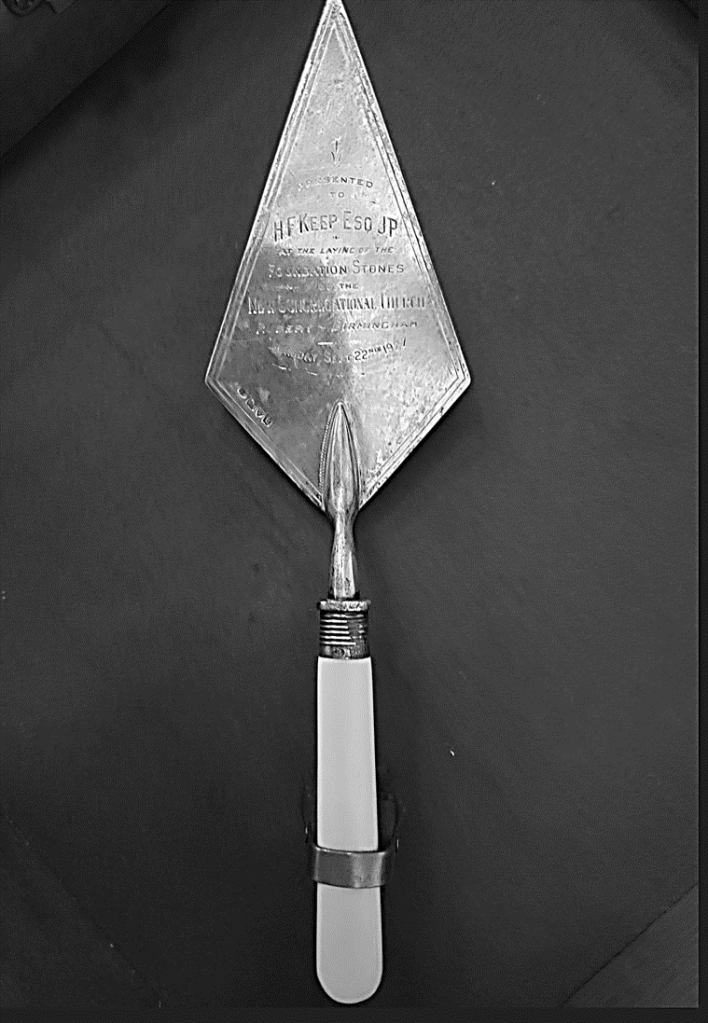
By 1927 the building of the new church building was well underway and this trowel, which is still displayed in the church, has the following text inscribed on it:
“Presented to HF Keep Esq JP at the laying of the foundation stones of the New Congregational Church Rubery Birmingham September 22nd 1927”
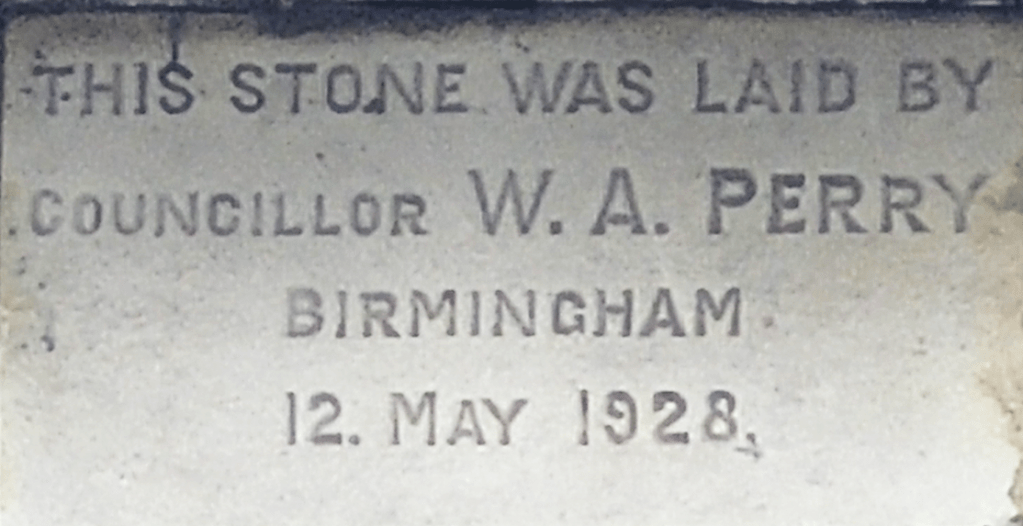
Various commemorative blocks were laid in the walls of the church hall as part of the building.
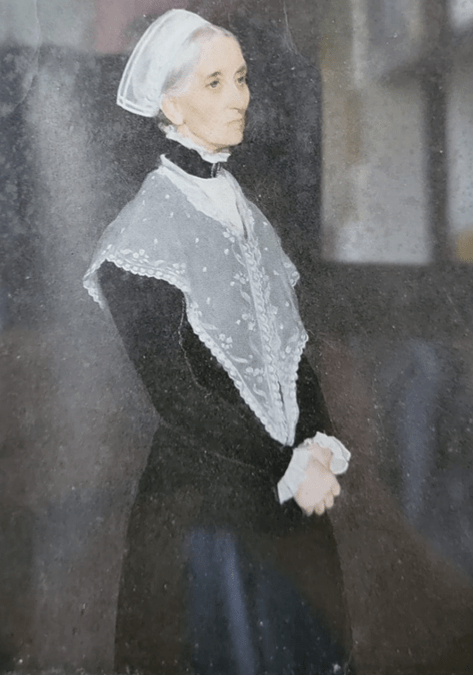
In 1928, on June 30th, the New Congregational Chapel was opened on Whetty Lane. by Mrs. Fanny Simon who was 82 at the time and took an active part in the ceremonies. She had been a Sunday School teacher in the old church building and was the mother of Viscount Simon of Stacpole. She lived at Chadwick Manor. She married the Rev, Edwin Simon and her Sunday School class made a carpet of rose petals at her wedding.
The new building was needed because of the increase in the numbers of worshippers. An early picture of the church is shown here. It was designed by J R Armstrong of Bournville Village Trust and is in the typical “Congregational style” with pews separated by two aisles. The pews were not the most comfortable and fortunately long cushions were added later for the worshippers’ comfort!
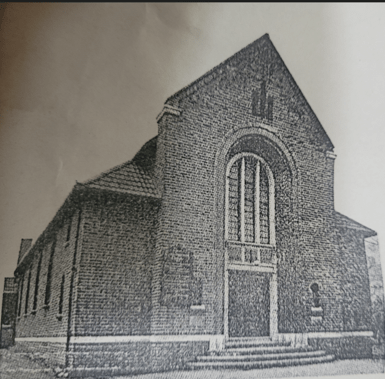

The church building is still in use today and contains many of the original fittings, such as the gas lamps that have been converted to run on electricity. The old coal-fired boiler, however, that was lit on a Friday to heat the church for Sunday services, has long gone to be replaced by electric heaters.
During the 1930s and 1940s there was a greater emphasis on Youth Work in the church but in 1931 the minister, Rev William James Roach Hier, told the Boys Brigade that no leader could be found and so the company could not carry on. However, he also advised the boys that a young man, a Rover Scout, had recently moved to the area and had offered to run a Scout Troop. They chose this option over being closed down.
In September 1931, the first meeting of the scout group was held and 28 boys turned up. Thus the 277th Birmingham (Rubery Congregational Church) was formed and a Cub Pack quickly followed.
In 1938 the 150th Birmingham Girl Guides began meeting in the church and in 1944 the 150th Birmingham Brownies were registered at the church.
The church held many social events over the years and the photo on the left is of the Sunday school on an outing to Trentham gardens in the late 1950s. You can see the minister, Bert Jordan, on the far left.


In 1959 disaster struck when, on August 25th, the Church Hall, mostly made of wood and asbestos, was destroyed by fire. Ironically, shortly before its demise, the minister, Bert Jordan, had been discussing the possibility of extending it.
The Sunday School, the Youth Club, the Dramatic Society, the Scouts and Guides were all left without premises and equipment. The damage was estimated as being between £3,000 and £4,000. However, work started on building a new, better hall soon afterwards.
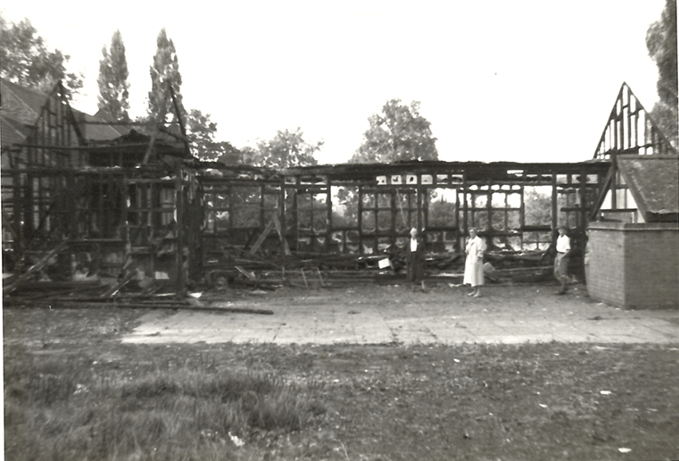
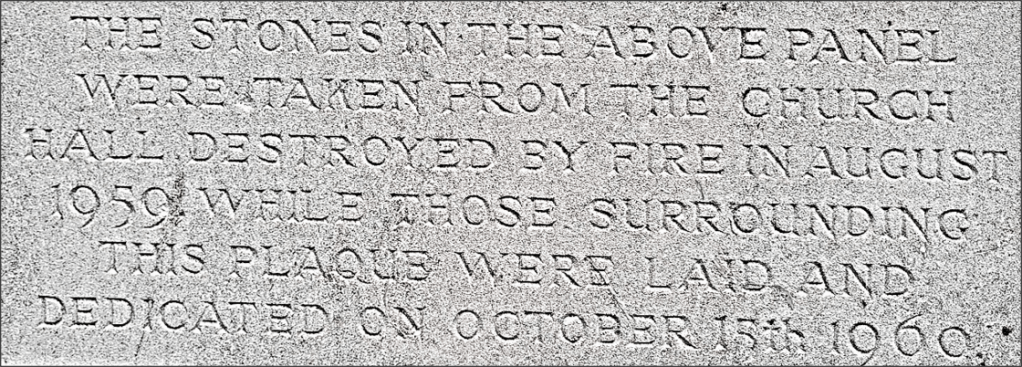
During the reconstruction of the hall, the original commemorative blocks were re-used along with new ones sponsored by locals.
This one, in the centre says:
“The stones in the above panel were taken from the church hall destroyed by fire in August 1959 while those surrounding this plaque were laid and dedicated on October 15th 1960“
These are clearly visible on the front of the church hall today.
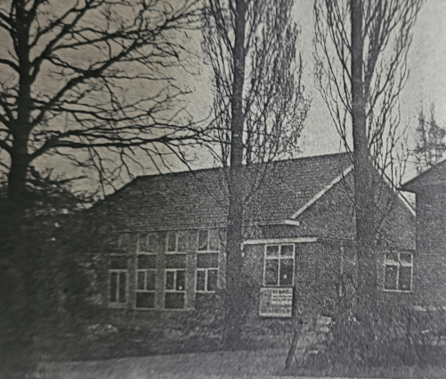
In 1961, on May 6th, the new Church Hall was opened. This is the hall in use today but you will notice that the “link building” is not there and that there are a lot more trees at the front.
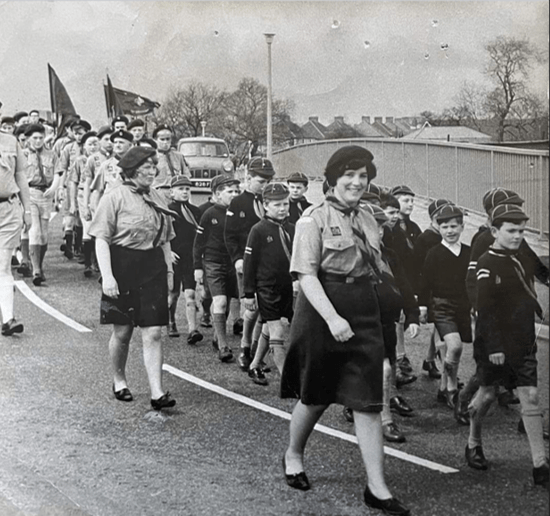
During the 1960s the cubs and scouts continued to meet regularly, holding parades in the local area, such as this one on the left.
In 1972, on October 5th, the Rubery Congregational Church became Rubery United Reformed Church (URC) when the URC was created by the merger of the Presbyterian Church of England and the Congregational Church in England and Wales. In 1981 the denomination expanded when Churches of Christ joined it followed by the by the Scottish Congregationalists in 2000.
In 1981 The Beacon Scouts held their Golden anniversary celebrations.
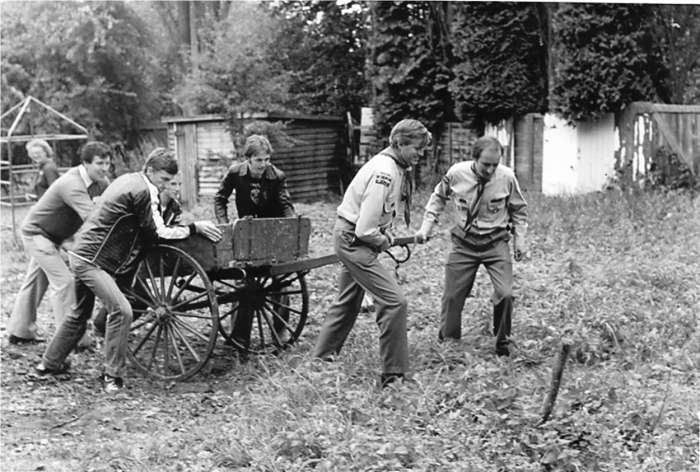
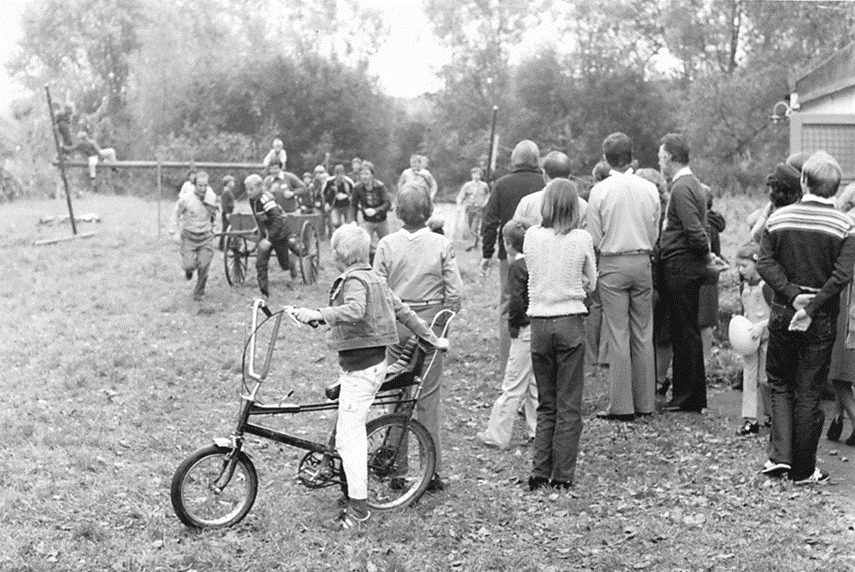
They held the equivalent of the Royal Navy Field Gun Competition, held at the Royal Tournament. This is where a field gun is brought into the arena, disassembled, taken over an obstacle course and then re-assembled.
The Scouts’ cart in this picture was their equivalent to the field gun that the navy used.
You can see part of the obstacle course at the back of the second photograph with a few scouts still climbing over the obstacle whilst others are pulling the cart with great enthusiasm towards the finishing line!
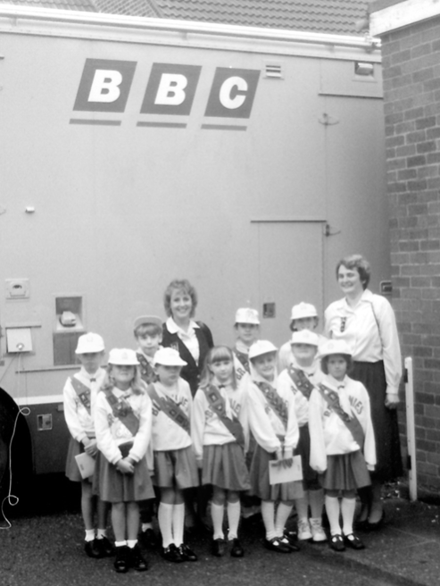
In 1994 the Church appeared on Songs Of Praise – this photograph is of the Brownies on the day.
In 1997 the Rubery United Reformed Church was renamed the Beacon Church Centre and in 2000 the large grassed area that was used for the Scout Hut and recreation, at the rear of the hall, was sold with a smaller area being retained for outdoor activities.
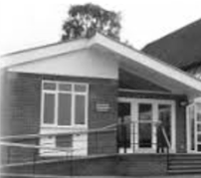
In February 2005 building began on the new “Link Building”, during a really cold spell and hall users had to put on extra clothes to compensate for the lack of heating!
This building links the church and the hall and is the main entrance for most events today.
It provides a step-free entrance, a large concourse with a large kitchen and toilets, together with facilities for disabled people.
TODAY the Church remains committed to working closely with Churches of all traditions, in prayer and social action including through Churches Together B45 (see separate page on CTB45).
We hope that you found that interesting and for those interested in who the ministers were – then there is a list by the years that they served below.
If you have any photos of associated with the church or knowledge about its history, we would love to hear from you – email us at BeaconChurchCentreWeb@Gmail.com
Ministers

2020 to date
James Hamilton
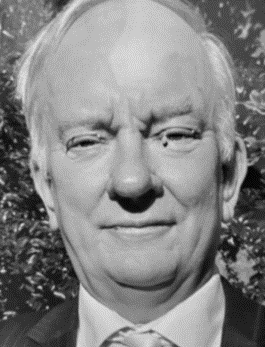
2001-2020
Ian Ring
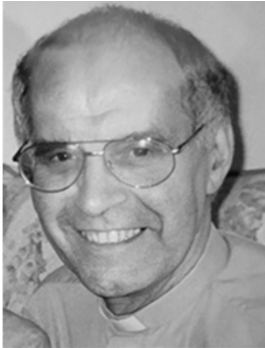
1992-2001
John Johansen-Berg
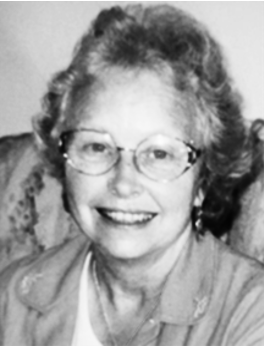
1992-1997
Joan Johansen-Berg
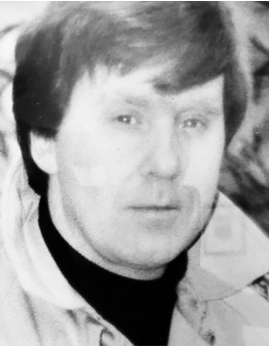
1990-1991
Philip Smith
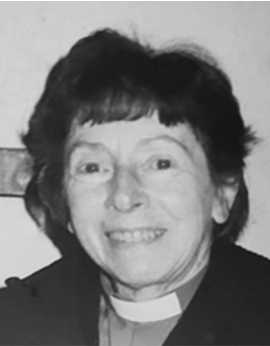
1987-1989
Stella Jones
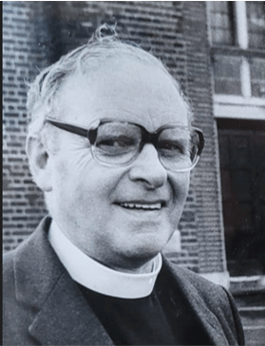
1979-1986
Leslie Ivory
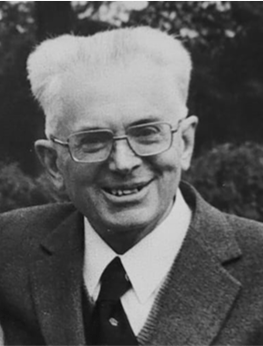
1976 – 1979
Sidney Roberts
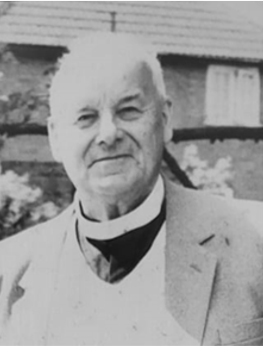
1966-1976
Donald Davies
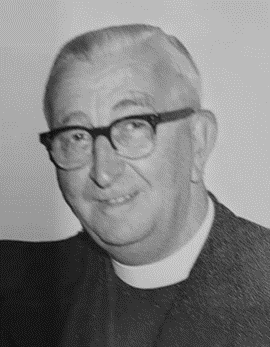
1955-1965
Albert (Bert) Jordan
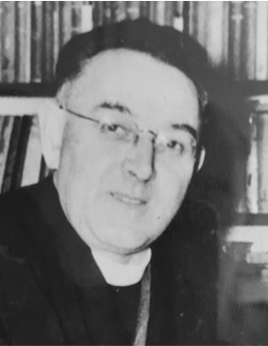
1947-1955
Glanmor Jenkins
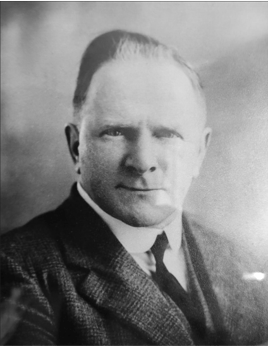
1922-1946
William James Roach Hier
1904-1921: R J Boardman
1901-1904: Gilbert Smith
1894-1901: Mr Leach
1883-1894: R J Boardman
1874-1883: Charles Parker
1868-1874: Rev Tout
1864-1868: Thomas Edwards
1861-1864: George Hinds
1860: Mr Carter
1856-1859: Benjamin Worton
1855-1856: W Harvey
1854-1855: James Wilson
Drama Group
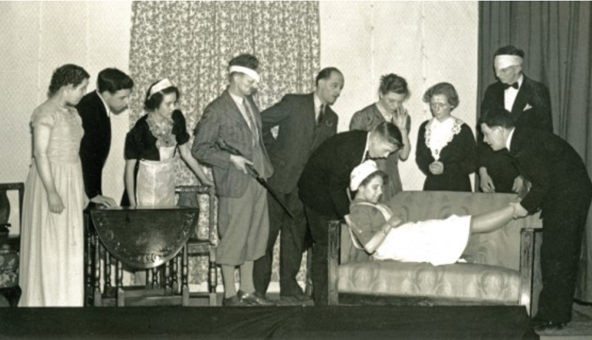
This photo is of Meet The Family cast members: (standing) Joy Young, Mike Birch, Miriam Hobbis, George Stretch, Norman Higgins, Janet Holland, Doris Parkinson, Jim Bate; (in front) Bob Sawyer, Valerie Gardener, David Banyard.
In 1951–52 the Rubery Congregational Church in Whetty Lane had a flourishing Youth Club comprising boys and girls in their early teens, most of whom had attended the church Sunday School.
The club had the usual social amenities such as table tennis and snooker along with outdoor activities such as football, cricket and rounders. There was even a boxing tournament for the boys to run off their aggressive energy.
The girls, however, had other ideas and the asked the club leaders if they could perform a play. They were fortunate at this time in that one of the leaders was a certain Mr David Banyard who, as well as being a church deacon and manager of Owens garage in Rubery, had some experience of amateur drama.
With the help of the girls he chose a play and assembled a cast from within the club and the church congregation. The play was called Meet The Family by John J Melluish.
It was about a well-to-do retired army major’s family who had a butler and a footman who were both shady characters intent on stealing the family silver. After much mayhem and not a few laughs the pair are brought to book and arrested by the local constabulary.
This was to be performed in the church hall, a substantial wooden structure at the time, on Thursday and Friday April 3rd and 4th, 1952. Thus, with the blessing of the church and minister at the time, the Rev Glanmor Jenkins, was born what was originally known as The Rubery Congregational Church Amateur Dramatic Society.
Inevitably over the years the membership of the group has changed until now only a few members of the group are church members, but the now-named Rubery Drama Group are still based at what is now The Beacon Church Centre in Whetty Lane, with the blessing and support of the now United Reformed Church.
The old hall was unfortunately destroyed by fire in 1959 but, largely by the efforts and enthusiasm of the then minister Rev Bert Jordan, a new and substantial brick-built hall was completed by 1961.
In the interim period the group rehearsed in an upstairs room at the top of New Road, Rubery – affectionately known as Smoky Joe’s – and in a workman’s temporary hut somewhere near St Chad’s Church. Plays were performed in St Chad’s church hall and in a hall on the Rubery Hill Hospital grounds.
Over the years, the group has had its highs and lows. The membership has been as many as 25+ and as low as 7. Some members met their wives or husbands through the group, and many long lasting friendships have been formed.
Sadly, some ex-members have passed on to that great theatre in the sky and are fondly remembered. On the other hand, two of our members were there at the very beginning and are still going strong today!
Rubery Drama Group’s portfolio includes plays by a wide selection of past and contemporary playwrights including Shakespeare, Ibsen, Arthur Miller, Noel Coward, Alan Ayckbourn, Ronald Harwood, Michael Palin, David Tristram and Alan Bennett.
One of the group’s high points was the 1983 production of The Dresser by Ronald Harwood, directed by long-standing member David Morris. This had very favourable reviews and two of the actors were nominated for and received Evening Mail Entertainer Awards for “achievement that added to the standing of amateur theatre in the Midlands”.
In 1952, some of the younger members were being made up to play older parts. Now some of the older members are attempting to look good in the younger roles!
 Home
Home 